
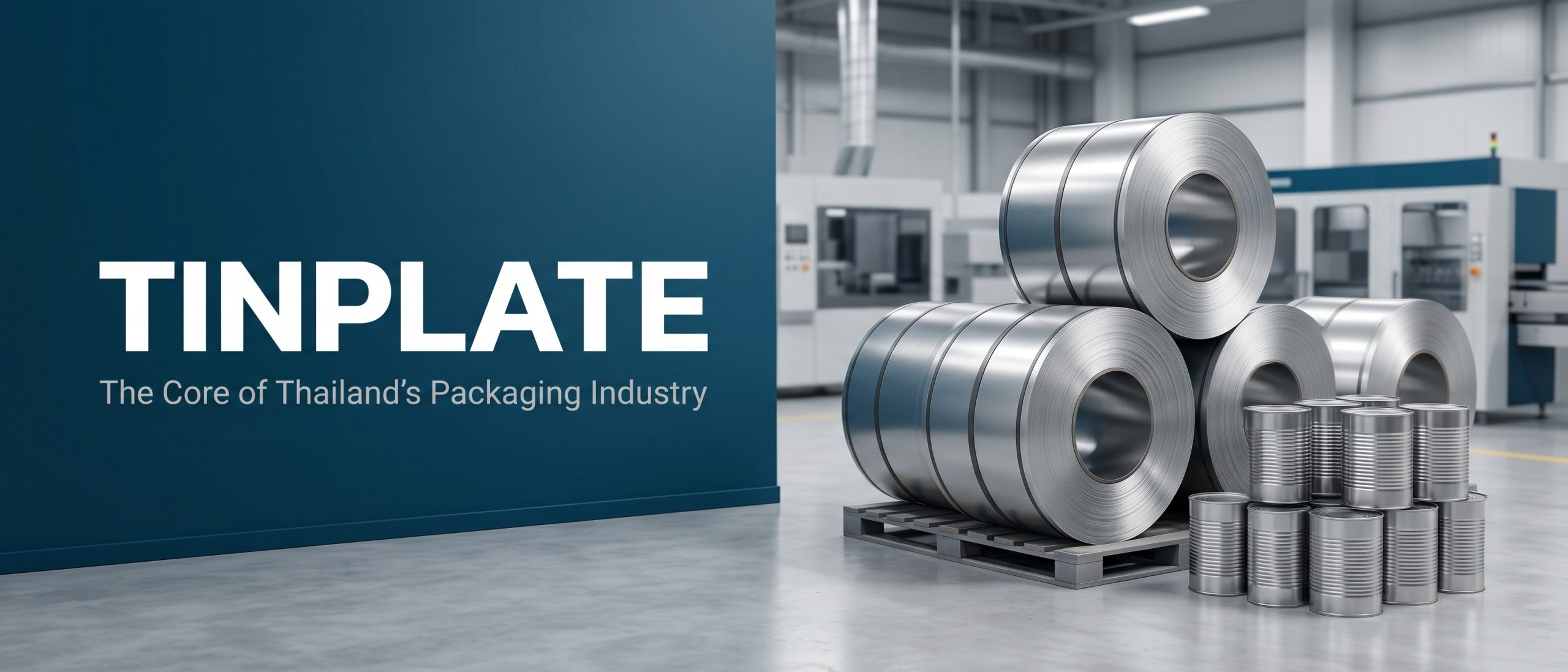
Have you ever wondered how food cans, paint cans, or the metal packaging we see every day are manufactured? Why don’t these metals rust, and why are they safe for food contact?
Today, Thai Tinplate Co., Ltd. will take you on a deep dive into the knowledge behind “Tinplate,” along with updates and career opportunities with us.
1. Deep Dive into Tin Plating: Which Innovation Suits You?

Tinning on steel sheets is a crucial process that helps prevent corrosion and rust. In the industry, there are 2 main methods as follows:
Hot-Dip Tinning: This involves dipping steel sheets into molten tin.
Pros: Produces a thick tin layer with high corrosion resistance.
Cons: It is difficult to control the consistency of the thickness and consumes more tin.
Electrolytic Tinning: This uses an electrical current to deposit tin onto the steel surface.
Pros: Allows precise control of tin thickness, provides a smooth and even surface, and saves resources.
Cons: If a very thick tin layer is required, the process becomes complex and highly energy-consuming.
Our Standard: Thai Tinplate’s products utilize the Electrolytic Tinning process to deliver steel sheets with a smooth, even surface and the highest safety standards for our customers.
2. Choosing the Right Steel Thickness for Your Business
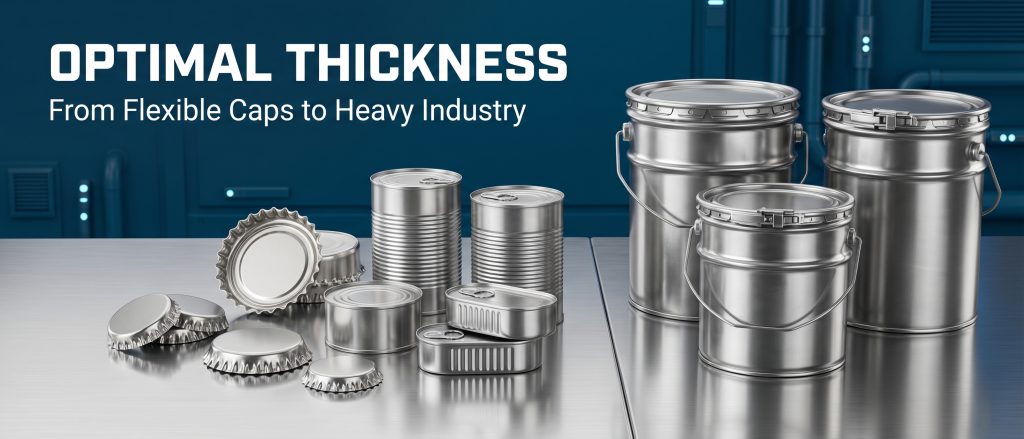
The thickness of tinplate directly affects its strength and formability. We can categorize them to suit different business groups as follows:
Thickness 0.15 – 0.20 mm: Suitable for various closures such as crown caps for soft drinks, jam lids, or small packaging that requires high flexibility.
Thickness 0.21 – 0.28 mm: The most popular thickness for the processed food group (canned fish, canned fruits, condensed milk) because it can withstand heat sterilization pressure well.
Thickness 0.30 mm and above: Suitable for heavy industry groups such as paint cans, lubricant cans, or chemical drums that require structural integrity and resist distortion during transportation.
3. How to Identify "High-Quality" and Safe Tinplate?
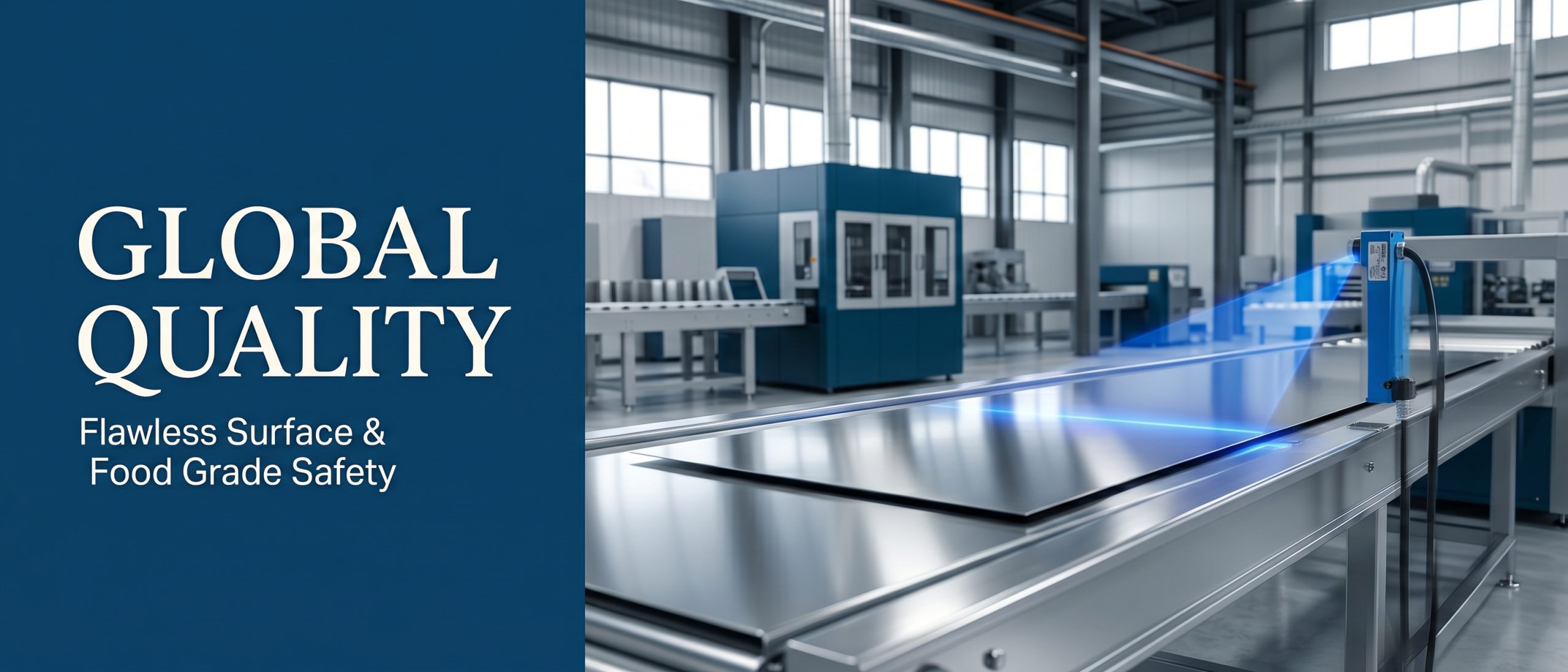
Choosing tinplate for product groups (especially food) requires observing 3 key criteria:
Surface Finish: Must be free of scratches, pinholes, or stains, as these small spots are risk areas for rust.
Tin Coating Consistency: The tin must be coated evenly across the entire sheet to prevent food or internal chemicals from corroding the steel core.
International Standard Certification: Must pass Food Grade certification and hazardous substance control standards to ensure there is no contamination into the food.
4. Usage Precautions: Coated vs. Uncoated
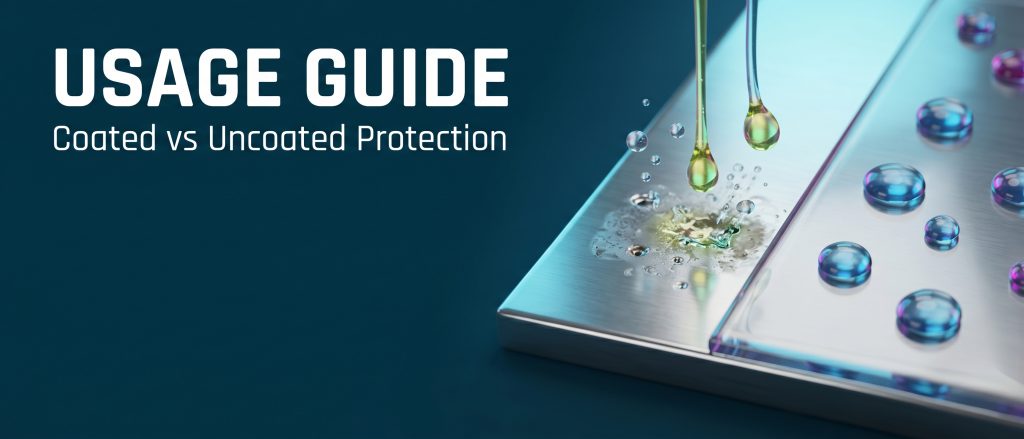
To maintain the quality of the packaging, the following limitations should be considered:
Tinplate: Although durable, it should not be used to package highly acidic foods (such as pickled foods) without an additional internal lacquer coating, as the acid can corrode the tin layer.
Uncoated Steel (e.g., Black Plate / Chrome-Coated Steel): Strictly prohibited for direct use with food packaging unless treated with standard protective coatings. It is suitable for structural work, paint cans, or non-reactive chemicals.
5. Internal Activities: Driving the Organization Towards Sustainability
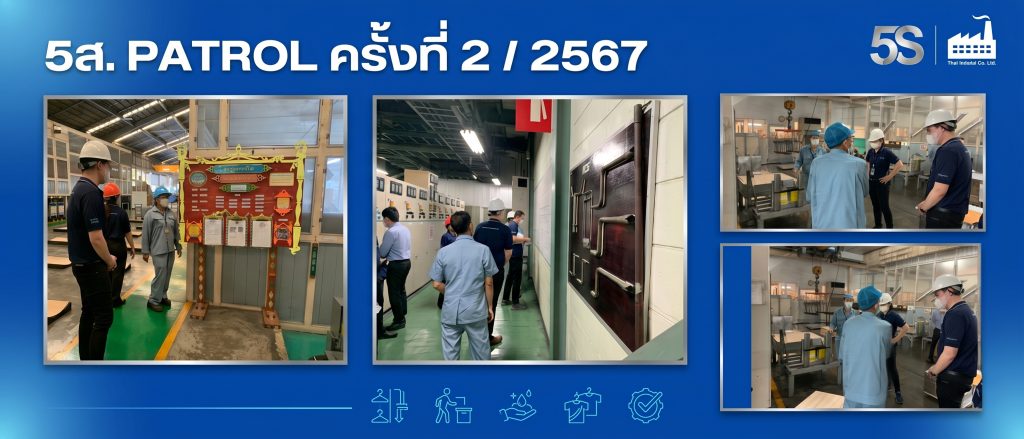
Event Photos: (Insert event pictures here)
Driving the organization with standards and unity. At Thai Tinplate, we never stop developing. Recently, our team united to conduct 5S activities (Sort, Set in order, Shine, Standardize, Sustain) to create a safe and efficient working environment. Additionally, we strictly maintain ISO standards and organize an annual company merit-making ceremony to enhance prosperity and boost the morale of all employees. Because we believe that “the foundation of good products comes from the happiness of the people in the organization.”